
Disclosure: This post contains affiliate links. If you purchase through these links, we may earn a small commission at no extra cost to you.
Blackheads are one of the most common skin complaints among teens — and one of the most misunderstood. Most teens have tried squeezing them, slapping on a pore strip, or scrubbing harder, only to find they come right back. That's because most popular blackhead "solutions" don't actually fix the problem.
This guide covers what blackheads actually are, why teens get so many of them, and the methods that dermatologists actually recommend — plus the ones to skip entirely.
What Are Blackheads, Really?
A blackhead is a type of open comedone — a pore that has become clogged with a mixture of excess sebum (skin oil) and dead skin cells. Unlike a whitehead, which is a closed comedone covered by a thin layer of skin, a blackhead is open at the surface. When the clogged material is exposed to air, it oxidizes and turns dark brown or black. That's where the name comes from — and it's also why blackheads are not caused by dirt, no matter how many times you've heard that.
Scrubbing your face harder will not remove them. In fact, over-washing and harsh scrubbing irritates the skin, strips the protective barrier, and triggers even more oil production — making blackheads worse.
Why Teens Get More Blackheads
Blackheads can affect anyone at any age, but they are significantly more common during the teen years. Here's why:
- Hormonal surge: During puberty, the body produces more androgens (hormones like testosterone). These hormones directly signal sebaceous glands to produce more oil. More oil means more material available to clog pores.
- Increased cell turnover: Teen skin renews itself rapidly, which means more dead skin cells that can mix with oil and clog pores.
- T-zone activity: The nose, chin, and forehead have the highest concentration of oil glands on the face — which is exactly where most teens see blackheads cluster.
- Comedogenic products: Heavy moisturizers, certain sunscreens, and some makeup products can clog pores if they're not labeled non-comedogenic.
What Does NOT Work (Stop Wasting Money)
Before covering what works, it's worth being direct about the popular methods that don't.
Pore Strips
Pore strips are one of the best-selling skincare products for teens — and one of the least recommended by dermatologists. Here's the problem: a pore strip grabs only the very top portion of a blackhead plug, leaving the root intact. The blackhead typically reappears within days. Worse, repeated use can damage the skin around pores, stretch them out, and cause irritation and redness. Satisfying in the moment, counterproductive long-term.
Squeezing and Picking
This is the most common blackhead mistake. Squeezing a blackhead with your fingers pushes bacteria and sebum deeper into the pore, increases inflammation, and can cause permanent scarring. If a blackhead won't come out easily, it is not ready — and forcing it causes more damage than leaving it alone.
Harsh Physical Scrubs
Walnut shell scrubs, sugar scrubs, and coarse exfoliating products create micro-tears in skin, disrupt the skin barrier, and spread bacteria. The American Academy of Dermatology specifically recommends against harsh physical exfoliants for acne-prone skin.
Steaming
Facial steaming does temporarily open pores (pores don't actually "open" and "close" — they just expand slightly with heat). But steaming alone does nothing to remove the clog, and excess heat can cause redness and broken capillaries in sensitive skin.
What Actually Works: The Dermatologist-Recommended Approach
1. Salicylic Acid — The #1 Blackhead Fighter
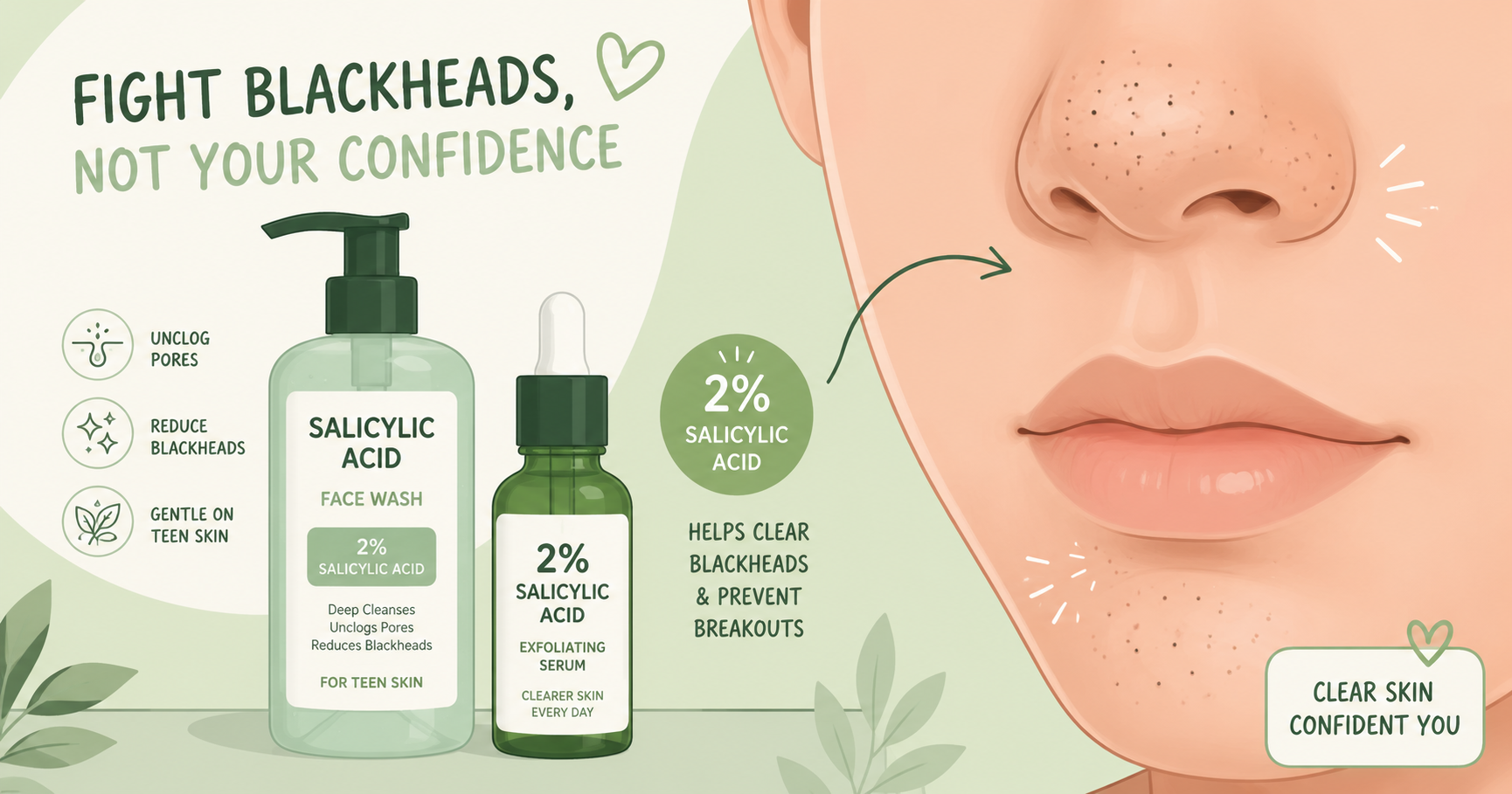
Salicylic acid is a beta-hydroxy acid (BHA) that is oil-soluble, meaning it can actually penetrate into pores and dissolve the sebum and dead skin causing the clog. It is the single most effective over-the-counter ingredient for blackheads and is recommended by dermatologists as the first-line treatment.
For blackheads specifically, a leave-on salicylic acid product works better than a wash-off cleanser because it has more time to work inside the pore.
Best salicylic acid products for teen blackheads:
- CeraVe Acne Control Gel (2% salicylic acid) 🛒 Shop — lightweight leave-on gel with niacinamide to calm redness. Apply after cleansing at night. $14.
- Neutrogena Oil-Free Acne Wash (2% salicylic acid) 🛒 Shop — excellent starting cleanser for blackhead-prone skin. $9.
- La Roche-Posay Effaclar Purifying Foaming Gel 🛒 Shop — great for sensitive skin, zinc-based with salicylic acid. $15.
Read our full guide on salicylic acid for teen acne for a complete breakdown of how to use it.
2. Non-Comedogenic Moisturizer and Sunscreen
One of the most overlooked blackhead causes is the products teens are already using. Heavy moisturizers, certain sunscreens, and some makeup products can clog pores even in teens with a good cleansing routine. Always look for "non-comedogenic" and "oil-free" on the label.
- Neutrogena Hydro Boost Water Gel 🛒 Shop — oil-free, absorbs instantly, won't clog pores. $18.
- CeraVe AM Facial Moisturizing Lotion SPF 30 🛒 Shop — SPF moisturizer in one step, non-comedogenic. $16.
3. Gentle Chemical Exfoliation (Once or Twice a Week)
Beyond daily salicylic acid, adding a gentle exfoliant once or twice a week helps remove dead skin cells before they can mix with oil and clog pores. Look for products with low-concentration AHAs (glycolic acid at 5–7%) or stick with BHAs like salicylic acid.
Do not use chemical exfoliants and physical scrubs together — that's too much for teen skin. Pick one or the other.
4. Keep Hands Off Your Face
The average person touches their face 20–23 times per hour. Every touch transfers oil, bacteria, and environmental debris directly onto skin. This is one of the easiest and most impactful habits to change for blackhead-prone teens.
5. Change Pillowcases Regularly
Pillowcases accumulate oil, sweat, dead skin cells, and hair products overnight. Sleeping on the same pillowcase for weeks means pressing all of that against your face for 8 hours every night. Dermatologists recommend changing pillowcases every 2–3 days for acne and blackhead-prone skin.
The Anti-Blackhead Routine for Teens
Morning: Salicylic acid cleanser → Oil-free moisturizer with SPF 30+
Night: Salicylic acid cleanser → Leave-on salicylic acid treatment (CeraVe Acne Control Gel) → Oil-free moisturizer
2x per week (night only): Swap the leave-on treatment for a gentle exfoliating toner or low-strength AHA after cleansing
Stick with this routine for a minimum of 6 weeks before judging results. Blackheads that took months to form don't dissolve in a week — but consistent use of the right ingredients will make a noticeable difference.
When to See a Dermatologist
Over-the-counter salicylic acid products handle the majority of teen blackhead cases well. See a dermatologist if:
- Blackheads are widespread, deeply embedded, or accompanied by cysts
- Over-the-counter products haven't improved the situation after 8–10 weeks
- Blackheads are causing significant distress or affecting confidence
Prescription retinoids (like tretinoin) are significantly more powerful than OTC options and can clear severe blackheads much faster. A dermatologist can also perform professional extractions safely — something that should never be attempted at home.
Quick Reference: Blackhead Dos and Don'ts
| ✅ Do This | ❌ Avoid This |
|---|---|
| Use 2% salicylic acid daily | Squeeze or pick blackheads |
| Use non-comedogenic products | Use pore strips repeatedly |
| Change pillowcases every 2–3 days | Scrub with harsh physical exfoliants |
| Moisturize (oil-free) | Skip moisturizer thinking it helps |
| Wear SPF every morning | Over-wash (more than twice daily) |
| Be consistent for 6+ weeks | Expect overnight results |